AK Certification Course Overview
Register Now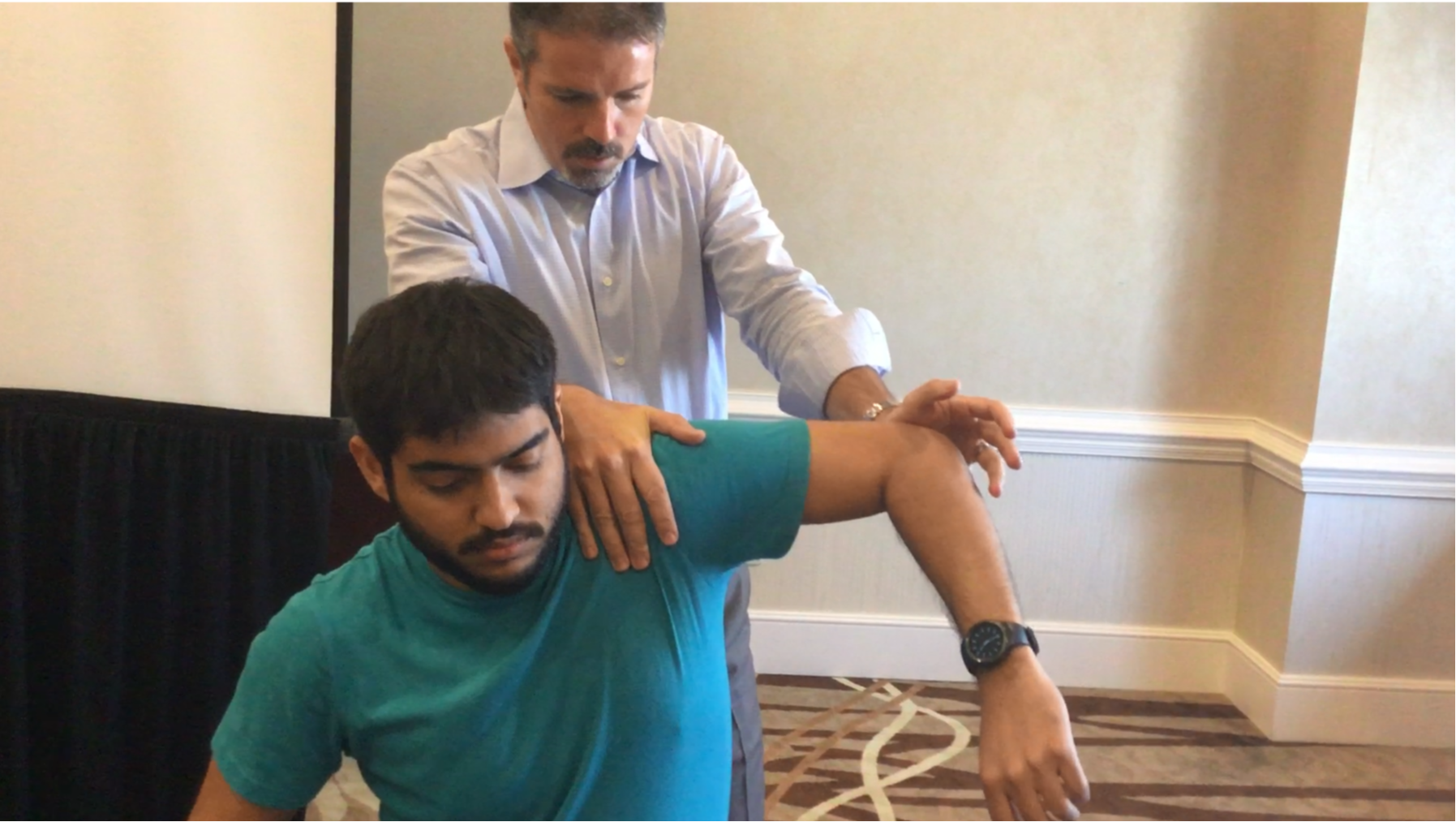
Everything you think you know about Applied Kinesiology is likely wrong
In school, we are spoon-fed deductive reasoning (learning to apply it is another issue). But true clinical mastery requires inductive reasoning – looking at the patient in front of you, observing the nuances and connecting the dots. Applied Kinesiology methods are inherently inductive.
This intensive, 8-session series is designed strictly for those who want to understand the true interconnectedness of the human body. We don't do rigid, "cookbook" protocols here. If you want to specialize in one tiny isolationist box, this isn't the course for you. AK is a diagnostic entity for those individuals who enjoy nuance and a true understanding of how the human body works.
The 8-Session Curriculum
Session 1: Foundations, Muscle Testing & The Spine - 9/19-20 2026
We skip the fluff, cover a brief history of how AK was discovered and dive straight into the ultimate foundation: the muscle test.
- The Blueprint: Learn exactly what the muscle test is, how to do it, what you can do with it and what you can’t.
- The Visceral Link: Every muscle in the body is reflexively related to a specific organ – making posture your immediate window into systemic dysfunction.
- Fixation vs. Subluxation: There is a distinct difference. You can have one without the other and correcting one can bring out the other. Learn how to differentiate them, how to adjust a fixation (it’s different) and how to get your adjustments to last.
Session 2: Pelvic Stability, Lumbar Discs & Adrenal Function - 10/30-11/1 2026
We build directly on the spinal assessment of Session 1 by adding pelvic assessment and corrections. This is where we start to see the vital connections between the structural system and biochemical balance.
- Ditch the X-Ray Crutch: For those who think you must have an X-ray to determine pelvic listings – think again.
- The Adrenal Connection: Adrenal dysfunction is incredibly common. You will learn how to assess for it, implement nutritional support and understand its direct connection to pelvic stability.
- Lumbar Disc Mastery: Learn how to accurately diagnose a lumbar disc issue and execute specific adjustments to correct them. Discover the massive importance of muscle balance to getting these patients to hold their adjustments efficiently.
Session 3: Lower Extremity, Gait & Visceral Health - 11/21-22 2026
In school (and Kindergarten), we are taught that every biomechanical system is interconnected – and then when the rubber meets the road in clinical practice, we are shown otherwise. We're changing that.
- The Kinetic Chain: Learn how to make the connection – and explain it clearly to your patient – how THEIR foot is connected to whatever other symptom they are experiencing. We start at the foot and work our way up to the hip, moving forward into gait analysis and correction. (The medial meniscus information alone is worth the entire weekend).
- The Gut-Systemic Link: We all know how important the gut is for overall health. Here, you will learn how to diagnose a gut problem, how to correct it and how to effectively teach the patient the reason they feel poorly is from the junk they are putting in their mouth.
Session 4: Upper Extremity, Lower Cervical Spine & Functional Endocrinology - 1/9-10 2027
Proper care depends entirely on a correct diagnosis.
- Cervical Disc & Fascia: Learn how to quickly diagnose a cervical disc issue and adjust it so it actually holds (your mind will be blown by how we adjust these). We will also look at fascia and trigger points in a completely different light and break down a carpal tunnel approach that is so simple it's ridiculous.
- The Endocrine Deep Dive: Hold on to your endocrinology hats as we dig deep into functional thyroid and pituitary function.
Session 5: Cranial-Sacral Dynamics & The TMJ - 1/30-31 2027
The skull is not just some static vault to house the brain. Each individual cranial bone moves and they move in a specific direction and pattern.
- Cranial Mechanics: Learn those patterns, understand their downstream ramifications and learn how to correct them.
- Neurological Shift: ADD, ADHD, and dyslexia are medical diagnoses, but that doesn’t mean they are wrong. By correcting the cranial-sacral respiratory mechanism, you will watch those issues disappear (often quickly). We wrap up this weekend by mastering the TMJ.
Session 6: System Integration, Dural Torque & Lymphatics - 2/20-21 2027
This is where we start to connect the dots we have been learning thus far.
- Deep Physiology: Master dural torque and lymphatic dysfunction. You will leave with a vast, functional understanding of proper diaphragmatic function and its direct connections to brain and heart function.
- No Cookbooks: Again, you will NOT learn a basic protocol for “this means you do that”. We will also begin to brush the surface of sex hormones and their intricate connection to the structural system.
Session 7: Meridian Therapy, Electromagnetics & Athletic Performance - 3/6-7 2027
Acupuncture – and don’t worry, there are no needles required.
- The Meridian Connection: Dr. Goodheart read a book by Felix Mann and realized: If the Chinese are right that the meridian is related to the organ and if I am right that the muscle is related to the organ, then the muscle must be related to the meridian. Well... it is.
- Body Electromagnetics: Dive into the electromagnetics of the body – how to assess it, correct it and observe the immediate results.
- Athletic Biomechanics: We finish the weekend back in biomechanics, looking into the aerobic and anaerobic systems, how to diagnose imbalances, and what to do about them. If you deal with athletes, Sunday’s information is an absolute must.
Session 8: Advanced Biochemistry, Review & Certification Exams - 4/17-18 2027
We end our journey into AK by tying up loose ends and discussing different biochemical diagnostic methods that have been developed to make life easier for our patients.
- Clinical Diagnostics: Liver dysfunction and deep tendon reflexes are just a few of the critical topics we will cover.
- Testing: The last few hours of Saturday will be spent reviewing for Sunday’s written and practical exams for certification.
Are you ready to change the way you practice?
If this seems like a massive amount of information, it is. However, as doctors, we all know how profound the human system is. To narrow that down in the form of specialization is doing a great disservice to the patient.
This is NOT a course for individuals who want to “specialize” in anything. AK is about systems and their deep interconnectedness. If you are a doctor or student who loves nuance and wants to learn how to truly work with the human body, your seat is waiting.
Seats are limited. Reserve your spot today to bridge the gap between textbook theory and clinical reality.
Have questions? Please reach out.
Curious? Watch the 4 minute video demonstrating the low force correction for a pelvic misalignment...and a clinical tidbit for pregnancy.